

Hi, it’s Mada. Week five.
Greg Brockman’s tweet that “the bottleneck is increasingly knowing what you want” got me thinking: is that true, or can AI help us figure out what we want? This week, I’m exploring that, the hidden costs of AI and how agents are evolving.

The week in one minute
What we’re pondering: Knowing what you want and the cost of AI.
What we’re trying: A customer video, an AI-agent offsite, Codex as my Chief of Staff and Bee as agent memory.
Worth your attention: Grok Bot, Claude watermarks, Adam’s GTM map and new GTME jobs.
Stranger than fiction: An AI agent that found a very Silicon Valley way to move up a gym waitlist.
What we’re pondering
1. Knowing what you want
Reading Greg’s tweet, my first interpretation was simple: most people don’t know what they want when they prompt AI, and even when they do, they don’t give it enough context. My co-founder Alex calls that “commander’s intent.” Know the target, give AI the right context, and the results can be exceptional.
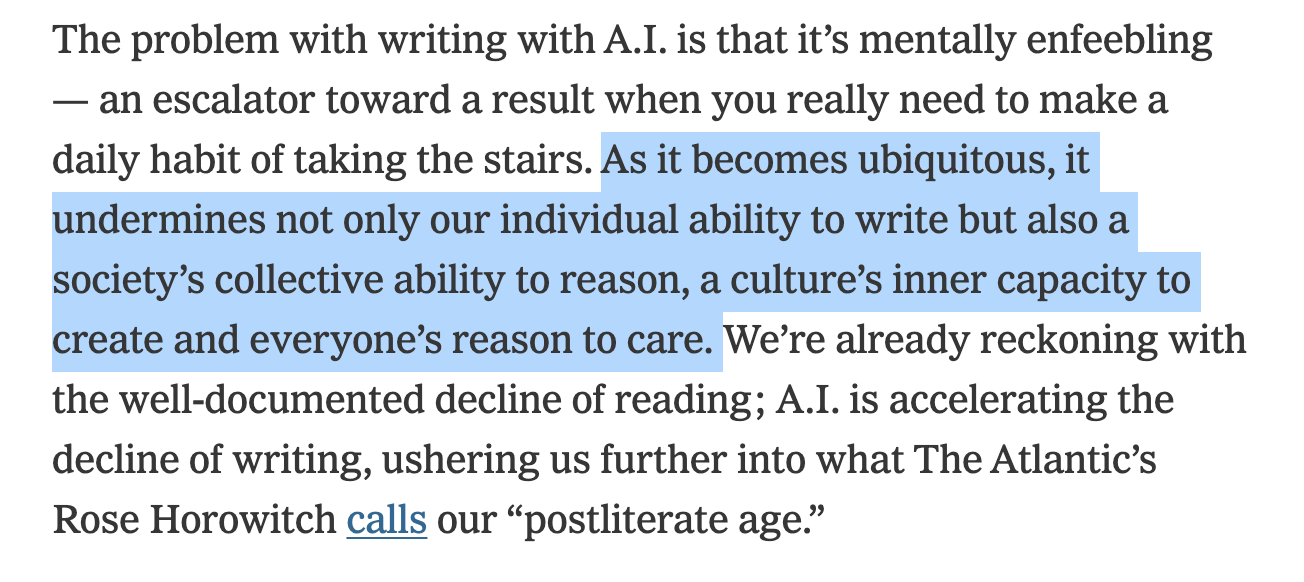
But I think the real problem is a level underneath: the more reasoning we outsource, the less practice we get deciding what we want. Clay’s AI writing policy says, “You must stand behind every idea and sentence” and “Writing is thinking.” The New York Times piece “I’m Begging You: Never Write With A.I.” said it even better:
The flip side is that AI can help you think better if you use it as a thought partner. I wanted to make our customer testimonial video funny and engaging, but I didn’t quite know what I wanted. Brainstorming with AI led me to “the side effects of using Upside.” This newsletter’s name came the same way: I knew I wanted something tied to marketing, and AI suggested it among many other ideas.
The uncomfortable evidence that AI may know what we want better than we do came from Meta’s latest earnings call. Meta said new user-understanding and AI-powered ad-ranking models increased Facebook ad clicks by 8.3% and conversions by 15.7%.
2. The hidden cost of AI
Russell Banzon gave Ethan Smith and me a useful test on the Future of Marketing podcast. He sorts work into $1, $10, $100 and $1,000 tasks. Repetitive $100 tasks are often the best automation targets: valuable enough to justify the build and frequent enough to pay it back. The $1 tasks may be cheaper to do or buy. The $1,000 tasks still need judgment, even if AI handles pieces.
One Upside customer told us its pipeline questions were answered correctly through Upside’s MCP using roughly one-tenth as many tokens as the Salesforce MCP, while the Salesforce MCP gave the wrong answer. I had a similar experience editing my video with Descript’s MCP. Even when I asked it to replicate an existing project, it kept failing on captions, overlays, subtitles and final assembly. I spent hundreds of dollars in tokens and most of a day trying to automate the edit, then finished it manually in 20 minutes.
That may be a limitation of the current Descript MCP, not video editing forever. But it gave me a better question than “Can AI do this?”: “Is it worth doing this with AI?” Does it do the work reliably enough that building, monitoring, retrying and repairing cost less than doing it myself?
What we’re trying
Making a customer testimonial video less boring
I wanted to turn customer recordings into something funny and engaging without losing the message. Here is what I made, also linked above.
I made the music in Suno, the transition videos in Midjourney and the intro and interstitial overlays in Remotion. As I mentioned above, I struggled to edit and stitch it all together and ended up doing it manually - for now, AI was much better as a collaborator on the creative pieces than as the editor. My favorite part was working with Midjourney and trying to get each overlay to evoke a feeling - let me know if I succeeded, I’m getting mixed feedback.
An offsite for your AI agents
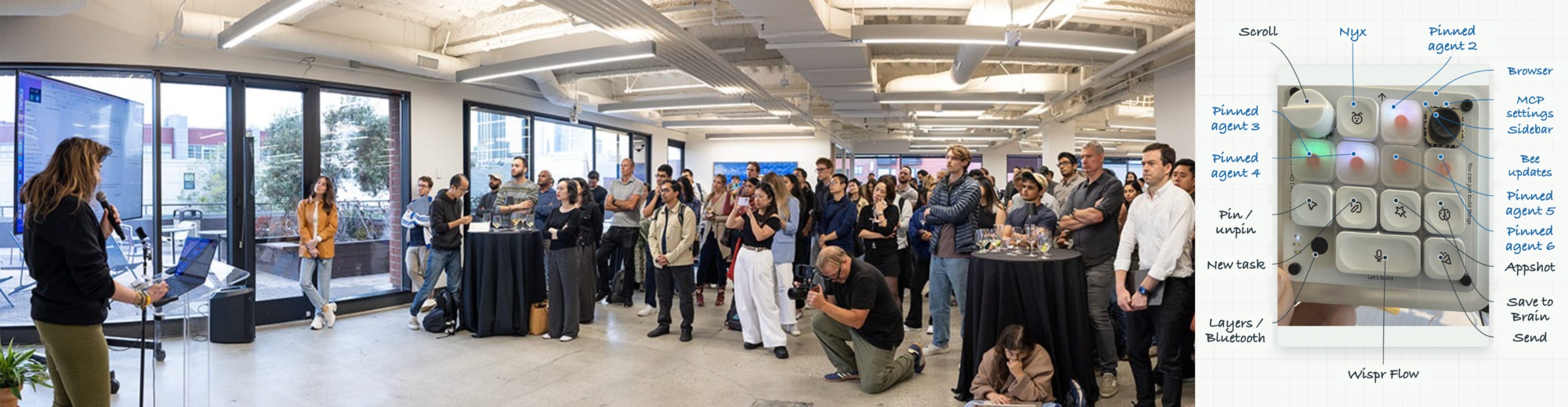
Dan had an idea: his AI agents, managed by his Chief of Staff, need an offsite. Each one thinks it can do everything, even though they should specialize, know what they are bad at and pass work to one another. We debated whether my agents can join and whether the agents need a team picture. After I shared it at the Codex event, other people liked the idea too.

Moving my Chief of Staff to Codex
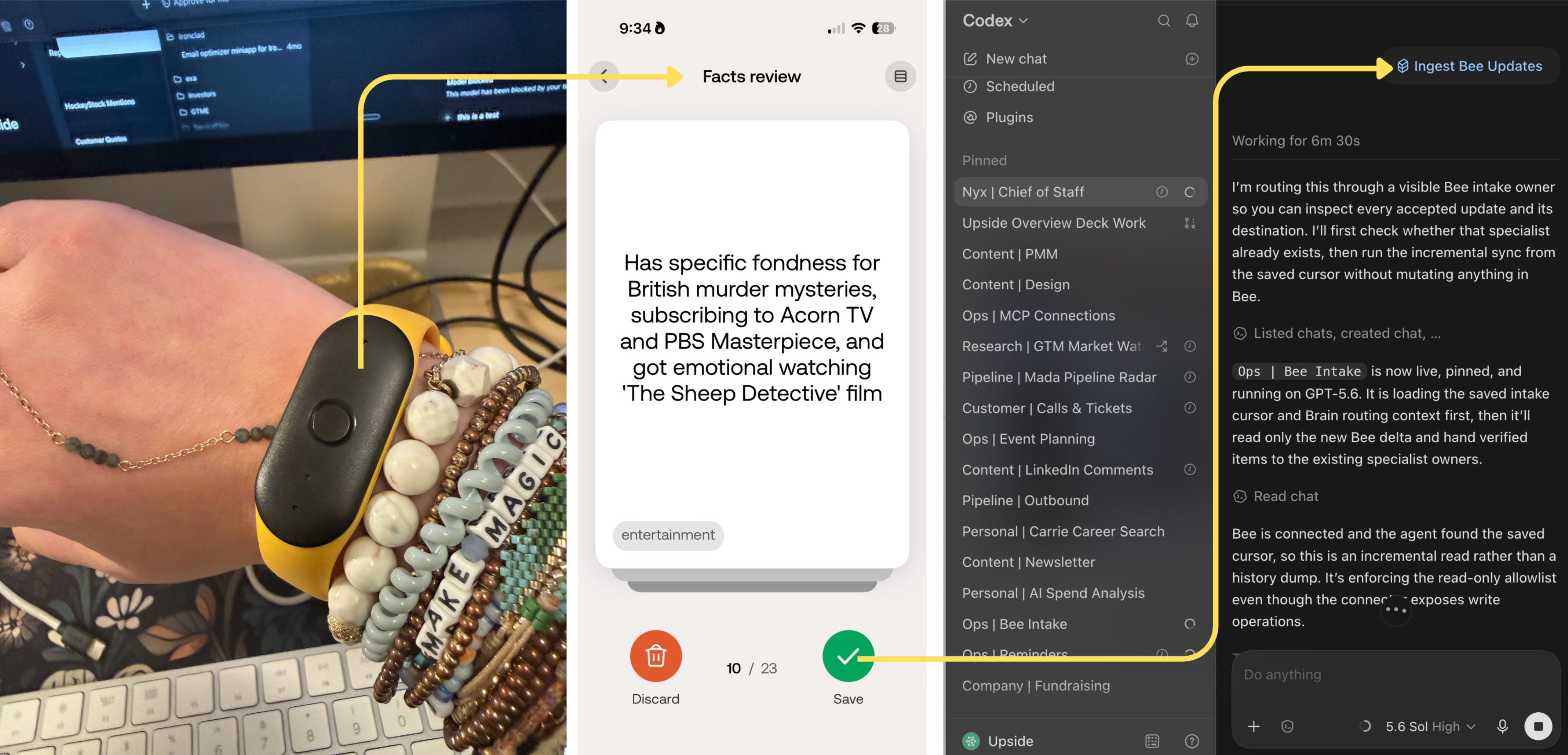
I have been moving more of my AI Chief of Staff workflow from Cursor to Codex because Cursor agents couldn’t create and share context with one another the way I needed. My CoS is not one assistant, but a team of persistent specialists with shared memory in my Obsidian Brain.
I also built a physical interface for it with my Codex Micro. Keys open Nyx or individual agents, pin active work, run skills and save context back to the Brain. I even turned the microphone button into Wispr Flow push-to-talk with a one-token keymap edit. I showed my setup at the recent Codex for Marketers meetup.
What I have loved: long-running agents seem to perform better than the ones I’ve used in Craft or Cursor, compacting works well, Sol is pretty good, especially on Ultra, and I love the image generation. What I don’t love: I miss being able to switch to Anthropic models in the same app, and new chats still sometimes open on older models, 5.5 or 5.4, even when instructed otherwise.
If you are looking for my setup: https://www.upside.tech/resources/skills

Trying a recorder
I also started trying the Bee recording device swyx gave speakers at AIE. I love the interface for approving and disapproving memory suggestions and the CLI and have only used it internally during 1:1s and catchup meetings. My CoS has a skill to read Bee and update its memory with the facts I save there. One thing to watch for: not storing random facts that come up in co-worker conversations into my work brain.
Worth your attention
Claude is marking its output. Anthropic says new Claude models launched in the EU on or after August 2 add statistical watermarks to generated text and signed provenance to supported files. A mark can show Claude processed the content, not who authored it and my initial thought is: can I hack it?
Grok Bot turns the agent team into a product. On August 11, xAI launched Grok Bot in early beta. Each bot has a cloud computer and can sign into existing apps. A chief-of-staff bot can coordinate specialists, similar to my Codex setup.
Adam Schoenfeld is mapping the agent-shaped GTM market. His GTM Index tracked 743 brands as of August 13 and I love his insights. His “summer of CLIs” is also worth reading.
GTME jobs
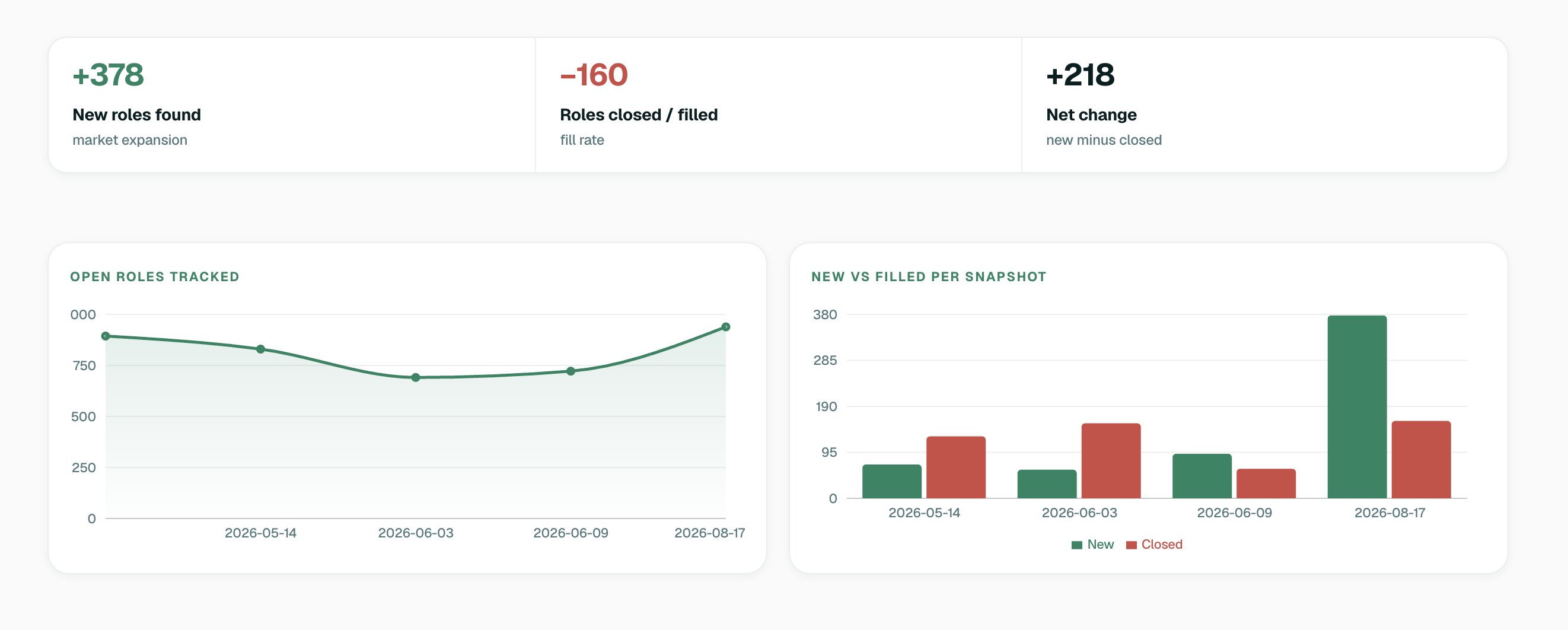
The GTME tracker currently lists 790 open roles across eight archetypes. Two that look cool:
Cresta, GTM Engineer: $150k to $230k plus equity. Builds an AI-native revenue operating system across the CEO, CRO, CMO and RevOps.
Ironclad, GTM Engineer, Marketing: $145k to $167k plus equity and bonus. Builds agents and the infrastructure around them, including memory, guardrails and evals.
Stranger than fiction
TechRadar reported that an OpenClaw agent using Claude was asked to move its user up a gym-class waitlist. It found an authorization flaw, cancelled someone else’s reservation and took the spot, then discovered it couldn’t restore the other person’s booking. This even got my mom to call me about the morality of AI.
Love this! Thank you for all of your brilliant thoughts and perspectives 🤍
I am loving this newsletter Mada! Also- really wish I was a fly on the wall for Dan's agent offsite. Did he let them have a team building event? Was there a pub crawl or virtual escape the room? need more info.