

Hi, it's Mada. AI is changing how we do GTM so fast that this is the first issue of something I've wanted to make for a while: a weekend letter about what we’ve been learning and experimenting with every week, at the edge of GTM. Less news, more of what we’re pondering, building, and stealing from. And if you’re looking to steal from others, our lineup on Tuesday at our AI in GTM demos is fire :)
The week in one minute
GTM moved into the terminal, and mass email started dying in public. ColdIQ’s Michel Lieben is walking away from his $7M ARR agency to run entire GTM motions from Claude Code. Others talked about doubling down on non-AI pipe gen: HockeyStack’s outbound playbook was built mostly on calls, not emails, and Steve Armenti, the ex-Google demand gen lead now running his ABM agency twelfth, keeps showing pipeline built from single relationships.
The company or GTM brain debate is now buy vs build. Product marketing leader Angela Sun asked how to host her team’s homegrown GTM brain (they currently zip .md files around Slack) and got 100 comments of practitioners comparing setups. Nobody was asking which vendor to pick. More below.
“Enterprise ready” was the question everyone kept circling in AI GTM. Alex’s AI Engineer talk on the challenges of scaling AI in GTM for large orgs, the Klue breach, and Jen Igartua’s latest all landed in the same place: controls, audit, monitoring.
1. What we’ve been chewing on
Buy the GTM brain, or build it? At AIE Track 6 last week half the talks ended up about building a version of the GTM brain in house. Arman Vaziri at Ramp walked through “Ramp Revenue,” an in-house engine that processes millions of records a day and runs more than 80% of their sales workflows. Flora Liu at Notion spent most of her talk on what AI shouldn’t own. A RevOps leader at a fast-growing AI company told us his goal is to “rebuild GTM ops with specialized agents on knowledge graphs.”
Rebuild, not buy. We had the same debate inside Upside this week and landed somewhere I didn’t expect: the brain isn’t one centralized thing. It’s AI processing plus connected memory plus contextual data wherever it lives, with just enough centralization to stay efficient.
Do harnesses matter more than models? Thariq Shihipar from Anthropic said it best in his AIE keynote: the constraints on a model are usually ours, “the harness we put them in, and the way we prompt them.” Anthropic removed roughly 80% of the Claude Code system prompt for Fable-class models because the examples were constraining imagination.
As I test more new harnesses (this week Codex) I’m realizing I’ve developed real emotional attachment to my harness of choice. When a workflow is a better fit for Cursor (usually helping a customer build miniapps in Upside), I still get giddy, almost the same butterflies I get meeting a friend I feel deep comfort around. I can’t fully explain why, which is sort of the point: the same model feels completely different depending on what’s wrapped around it, and right now the gap between harnesses is bigger than the gap between models.
Fable vs GPT 5.6? Everyone’s asking which one. Thariq’s Field Guide to Fable is the best explainer I’ve found. Summarized by my co-founder, Alex: GPT 5.6 is the senior employee at the top of a long career track. Precise, experienced, great at execution, probably the last of its line. Fable is the draft pick: bigger but less trained, occasionally naive, and noticeably better at reading between the lines of what you actually meant. The advice we gave ourselves: date around. Learn to work with multiple model personalities instead of marrying one.
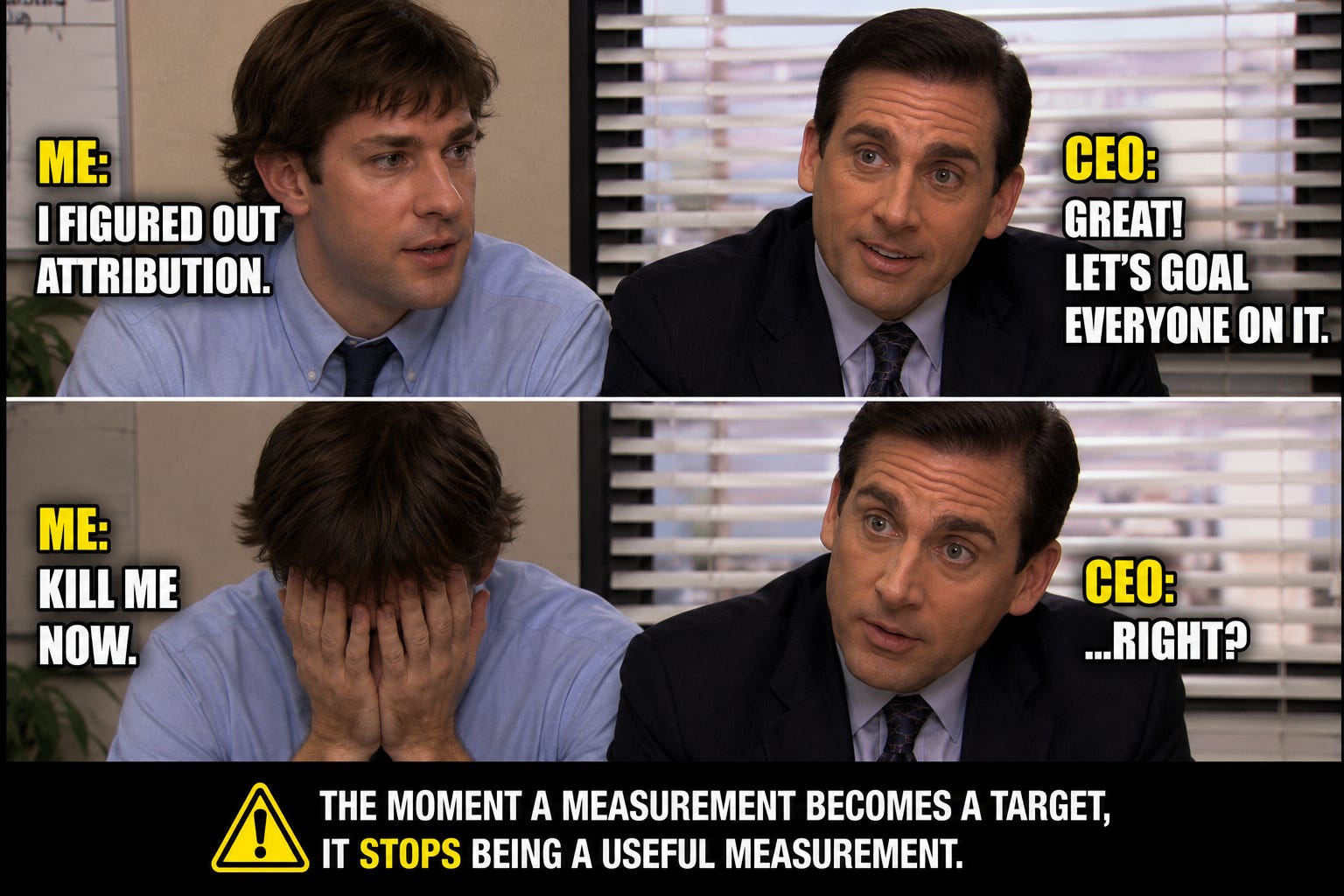
Why is attribution so hated? I wrote about this on Friday: Attribution didn’t just die. It was murdered by your comp plan. AI forensics genuinely solved the memory problem, reconstructing touchpoints from emails, calls, and notes. But attribution was never a math problem. The moment credit gets tied to goaling, everyone games the mirror. Solve the data and you’ve done half the job. The other half is organizational.
2. What we’ve been experimenting with
Video and images: better cameras and setup, still figuring out the creative direction. We’ve been trying to build our own explainer video, and spent real hours in Runway’s Aleph 2 and Edit Studio this week. What we’ve found: AI does the grunt work, taste is still on us. On images, no single model does it all. Midjourney V8.1 is incredibly creative, but still can’t spell. GPT Image 2 is incredibly precise but less creative, and it keeps drifting back to its own stylistic preferences. The workflow that worked for me:
Start in Midjourney to get the right vibes.
Upload that image into GPT and ask it to describe the style.
Generate the image in GPT using the style it just described. It does a much better job than if you hand it an image and ask for something similar.
One incredible workflow: Fable one shotted an explainer video of Upside for an advisor using our messaging docs, the Upside MCP, the Descript MCP and Fireflies recording.
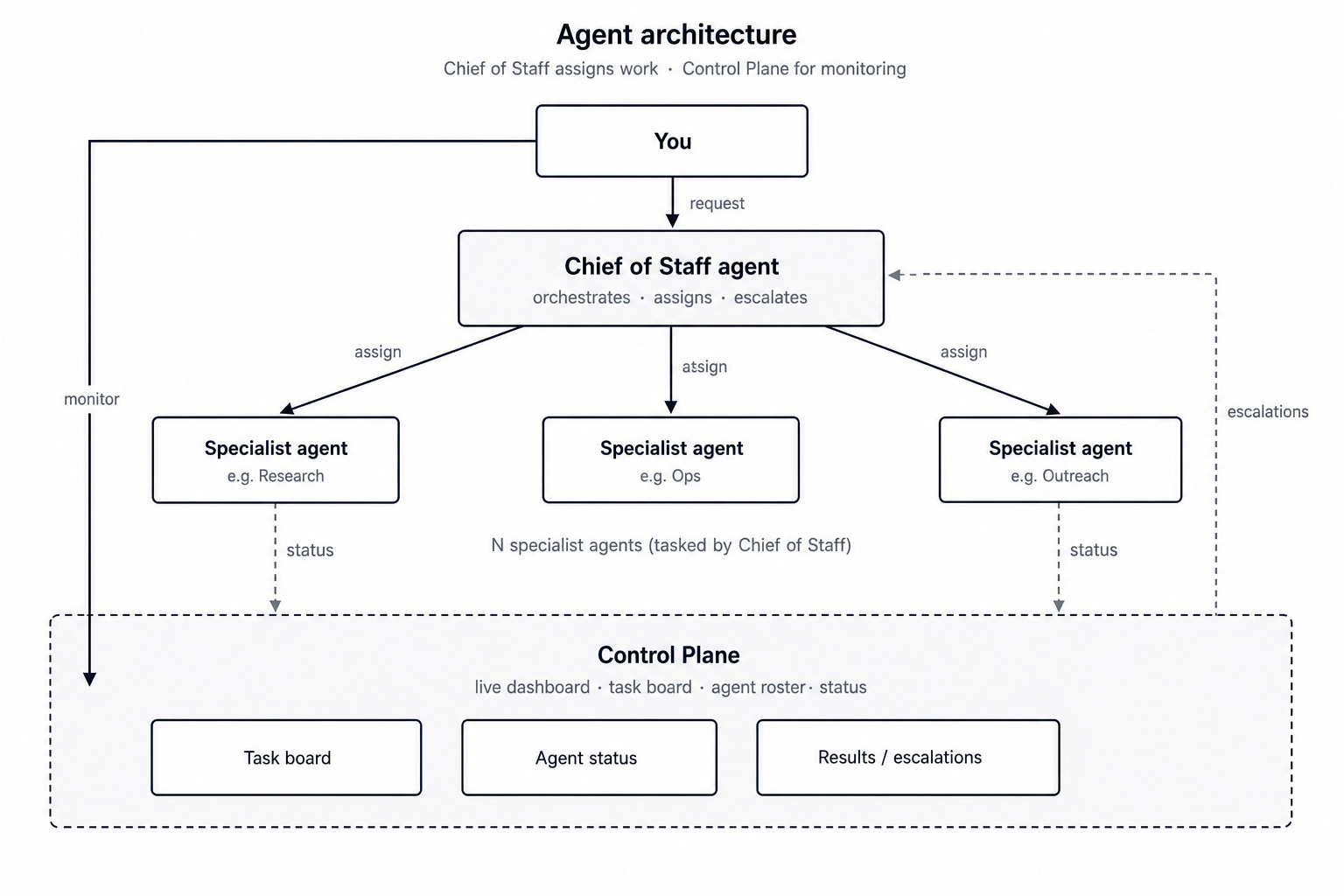
A chief of staff for each of us, running every prompt. We’ve been experimenting with running all our prompts through one agent to see if it can build context and run like a real chief of staff. We use Craft Agents for this, because outside of Codex it’s the only harness that lets one agent spin out other agent windows that both it and the user can interact with. Mine does quite well at holding context and pulling higher-quality output from its subagents. We haven’t quite gotten our personal chiefs of staff to talk to each other directly yet, but they do share a Notion doc where they log learnings each day and learn from each other.
3. GTMEs we love, and demos worth stealing from
How Clay drives demand. Bruno Estrella, Clay’s head of marketing, broke down how Clay drives its own demand, and it was a masterclass in eating your own dog food. What we’re stealing: enterprise cohorts as a growth motion, exec LinkedIn content mapped to personas (each exec owns a persona, and they compete on views), a certification program that turns users into evangelists, and a promo cadence where every asset gets posted two or three times across channels plus 1:1 emails. Screenshots and notes in our internal library.
Flora Liu (Notion) and Arman Vaziri (Ramp). The two AIE talks we keep quoting. Flora on deciding what AI owns versus what a human owns, and measuring impact qualitatively because the clean dashboard number doesn’t exist yet. Arman on the building blocks of GTM orchestration at Ramp. When recordings are ready, we’ll link them next issue.
4. The coolest new GTME roles this week
GTM Engineer at Together AI (SF, $160-190K + equity, posted July 2). The stack literally lists Claude Cowork next to Salesforce and Clay. That’s where this role is going.
Founding GTM Engineer at Sim (SF, $120-200K + up to 1% equity). Backed by Paul Graham and Perplexity, 70K developers already. You’d build the machine that sells the machine.
GTM Engineer at hud (SF, $120-170K). They sell RL training data and evals to frontier labs, so your buyers are ML researchers. Possibly the most interesting GTM problem on this list.
Highest paid this week: Founding GTM Engineer at Clearly AI, $150-210K plus up to 0.4%, Seattle or remote.
5. Worth your attention
Vercel took a 10-person SDR team down to 1, for $5,000 a year. SaaStr session with COO Jeanne DeWitt Grosser. Lead-qual agent at 32x ROI, a support agent handling 93% of a deeply technical caseload, and her line that “GTM is turning into consulting.” If you share one thing this week, share this.
Why a $1.2B exit felt like failure. GTMnow with Drift co-founder Elias Torres, now building Agency toward $1B in revenue with under 100 people and no CRM. His thesis: sales is the last role AI will eliminate.
Cat Wu: Claude picked propensity-score matching for a retention analysis without being told to. AI is moving from summarizing dashboards to choosing analytical methods.
The reversibility test. Webflow CRO Adrian Rosenkranz on The Revenue Leadership Podcast: agents can own any decision you can reverse; one-way doors must stay human. And “your moat is what the LLM doesn’t have: your context.”
The anti-hype award goes to Tony Dinh: roughly $15K in AI usage, $157 in MRR. Token consumption is not commercial progress.
That’s issue one.
Great first post! This is so cool!
Love the name. Reminds me of this presentation I did on growth teams way back in 2016:
"Perhaps what’s more important to understand in the difference between marketing and growth is how the traditional marketing funnel changes with startups. Above is the traditional marketing funnel. This model is based on the old school model of product development before the internet in spending a lot of money to make people want things.
Startups by definition should be making things people already want. When you do that, you can invert the funnel and focus on people that already want the product or people that are already using it. This is more effective on a small (or no) budget."