

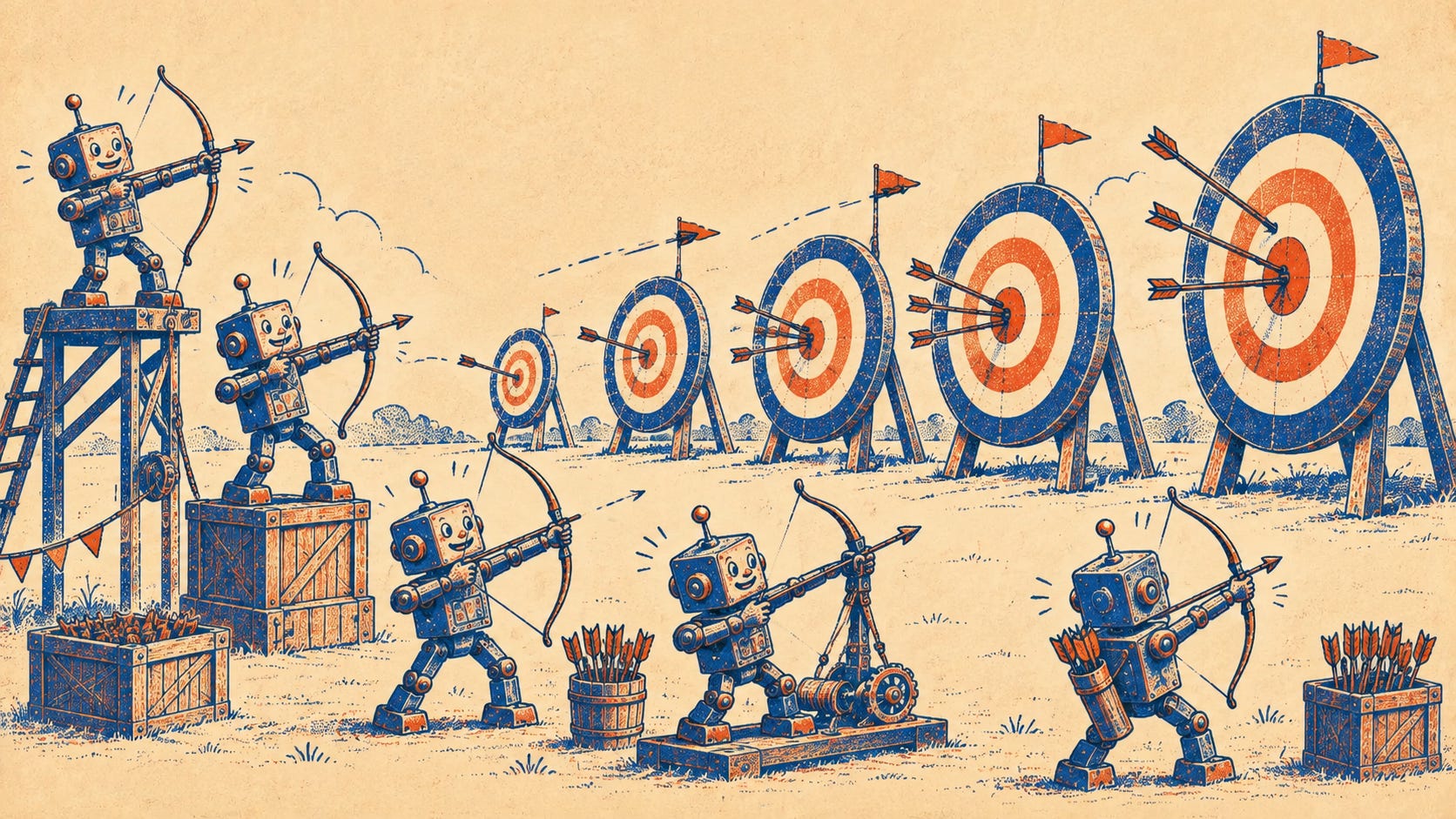
I have been consulting for a number of startups recently, and while I’ve always been enamored of product led growth, I have to say, there’s something deeply satisfying about being able to make a finite list of target customers. Whether it’s 50 or 5000, you just have to line them up and knock them down through whatever means possible.
This is the strategy most suited to companies selling big-ticket products, whether it’s software or hardware, that require multiple touches, elaborate procurement, security reviews, and winning over that one staff engineer whose opinion might outweigh the CFO. Account based marketing (or the even less sexy ABM) feels like a term you’d see on a 2018 conference lanyard, but it’s more relevant today than it has ever been. What has changed: ABM used to feel like a bit of inscrutable witchery, subjective in the way relationship-driven motions are. But in a world where demand gen is overrun by AI outbounds and slop content, the tried and true (even perhaps retro) discipline of ABM is quickly becoming what works best. Now with AI, it’s not only more measurable but more easily optimized than ever before. We can finally pinpoint what mattered, what flipped an account to a yes, and how we can replicate and optimize what worked.
I’ve watched this shift from the inside, running brand at Notion through its own arc from PLG darling to enterprise contender. I remember All Hands presentations we affectionally dubbed HTDWW (How the Deal Was Won), where usually a salesperson would walk through the steps that nabbed us the business. This dissection relied entirely on their own analysis and intuition, and was seldom systematized. (For what it’s worth, it also hugely undervalued brand marketing because of how hard it’s been to measure deterministically - though AI makes that feasible now too.)
Since then, the world has changed drastically. ABM still runs on trust, relationships, and repeated exposure and follow up. But more evidence of how it works can be retrieved. After all, it was always there - we’ve had recorders and email trackers for a while, it’s just that no one could go through and apply it at scale. Today, buyers for these products are researching through pathways we can observe, and we have new tools to both dig into the history of every account, and surface scalable, applicable insights.
Not simple, but more honest
For the first time, we’re able to actually look at an account as the unit of work - not just individuals or individual actions inside that account.
When you sell to a company, you’re really selling to a group of people inside it who talk to each other, disagree, forward things around, go to their own events and experiences, form their own opinions - and haggle to arrive at a decision in a room you’re never in. Depending on what you’re selling, this might be 6 to 10 people who have to get aligned. But ABM dashboards haven’t been able to capture this.
CRMs are built around leads, contacts, opportunities. Automations are built around individual people and the individual things they did. Reporting is built around events - who, what, when? As a result, your strategy depends on collective decisions, but runs on top of a measurement layer that only counts individual behaviors.
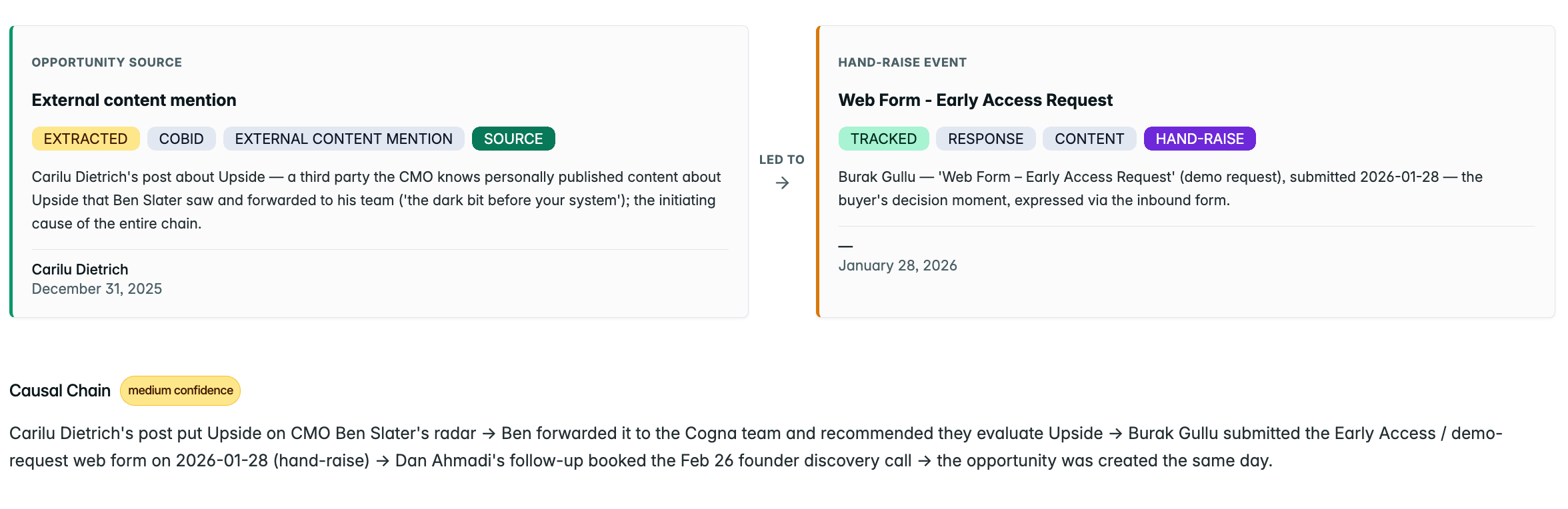
Ask most teams when a deal started, and they’ll point to the moment of opportunity creation. That’s the first hard date in the system and where any pipeline model kicks off. But ABM is actually everything between the day you decided to go after account and when an opportunity popped into your dashboard. That’s where the dinners, intros, the slow multithreading all took place. The hand raise of a demo or meeting request is always preceded by something else. And in good ABM, it’s prompted by manufactured conditions that might have played out over 18 months prior.
Now we can capture and evaluate all of this and its variable success - which actually makes things perhaps a bit more complicated and murky at first, but yields a much more accurate sense of what should be repeated (and invested in) across deals.
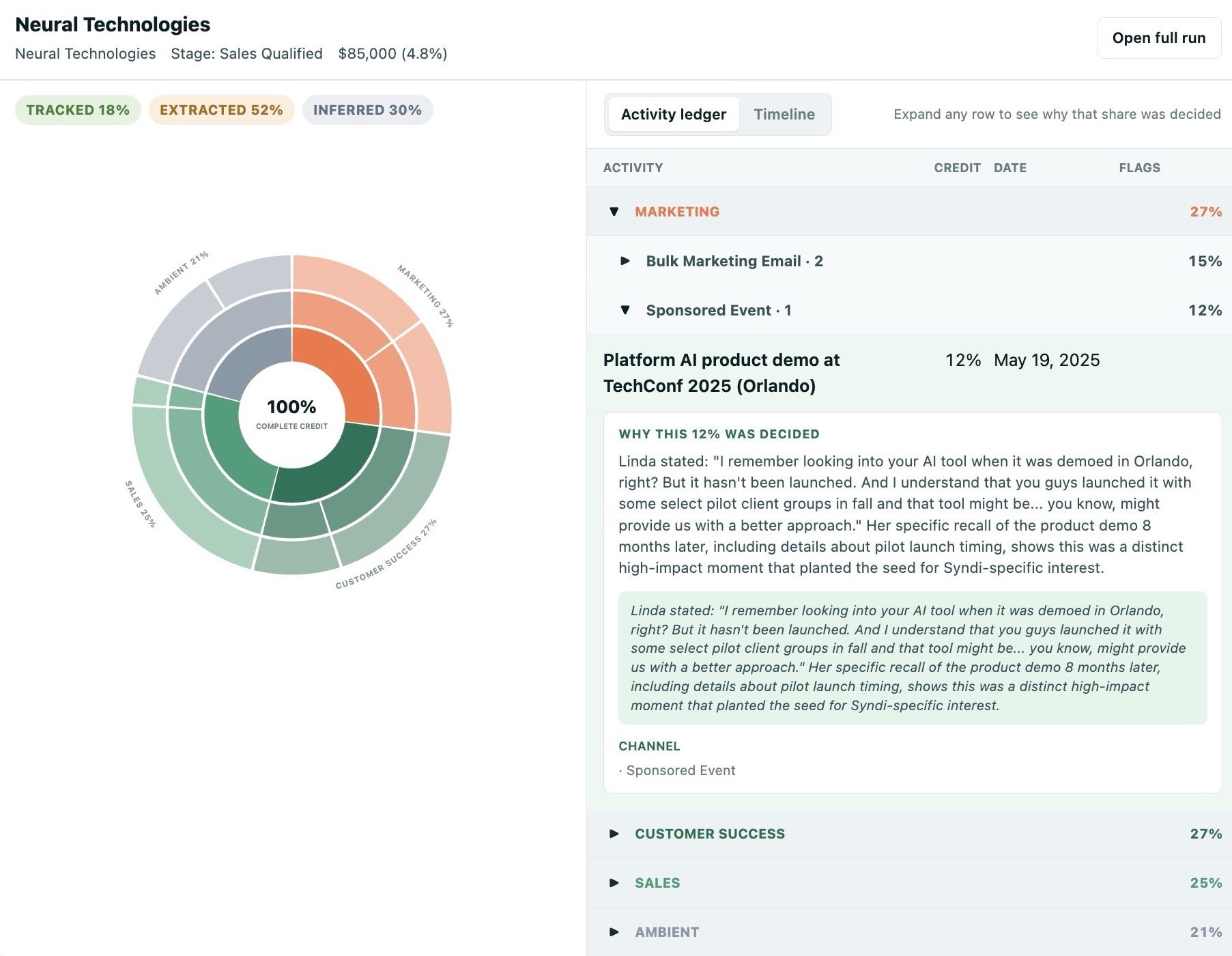
What ABM can look like
Here’s what a status-quo interaction targeting a customer might look like:
Dinner: You invite 8 people to a lux dinner at a hip new restaurant. Four of them are on your dream account list, and 2 of them accepted because they saw your billboard on the 101 last month. Something got said during the evening that changed their mind or piqued their interest about what you’re doing, but you only captured they attended (if you remember to upload the list).
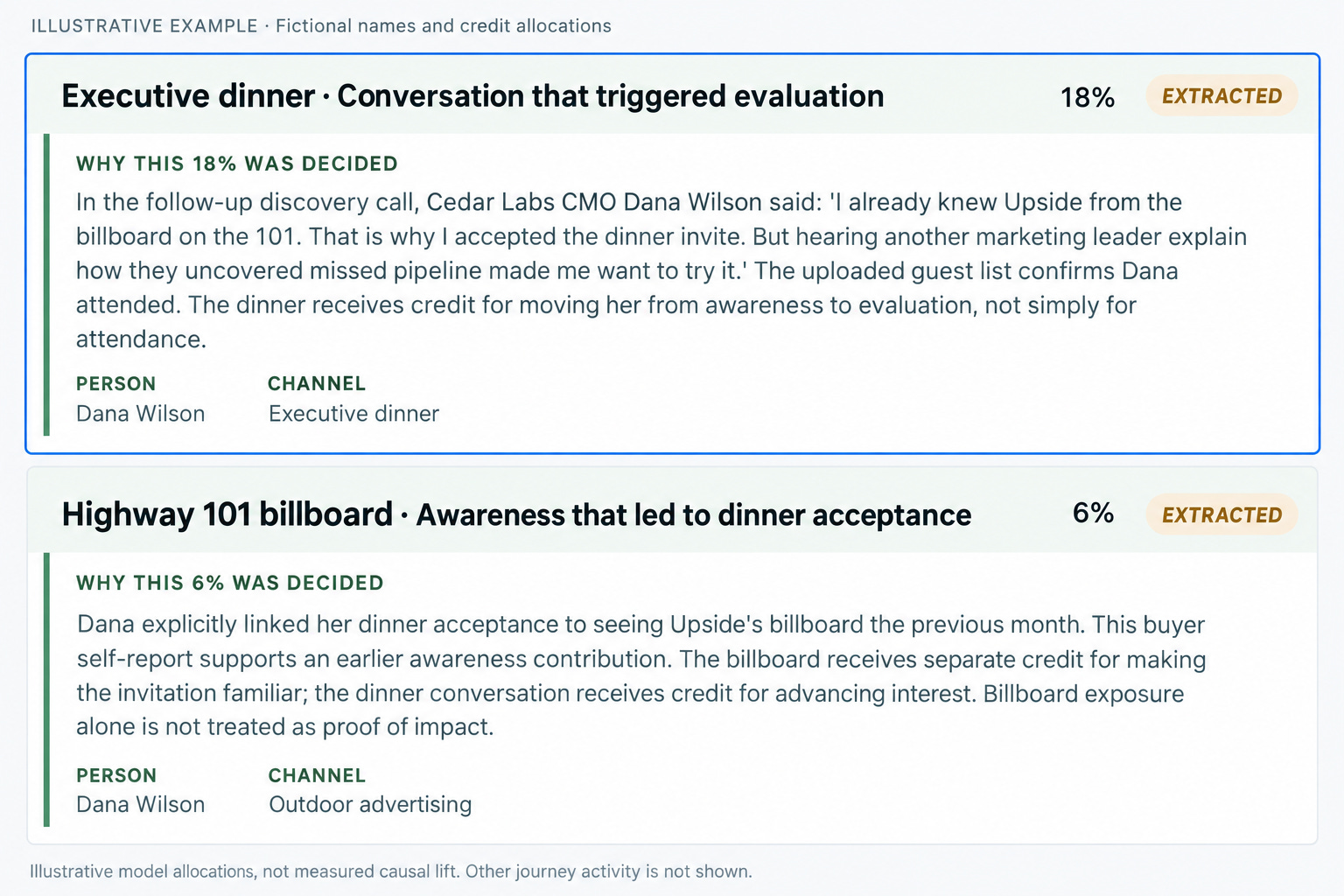
Exec-to-exec intro: Your CEO knows their CTO’s old boss and got her to send a glowing note saying they should take a serious look at your product. This gets logged as a “referral” without any sense of magnitude or influence.
One-to-few content: You create a custom teardown for each of three target accounts. You emailed it directly to your champions and didn’t log it (or their response if you got one) at all.
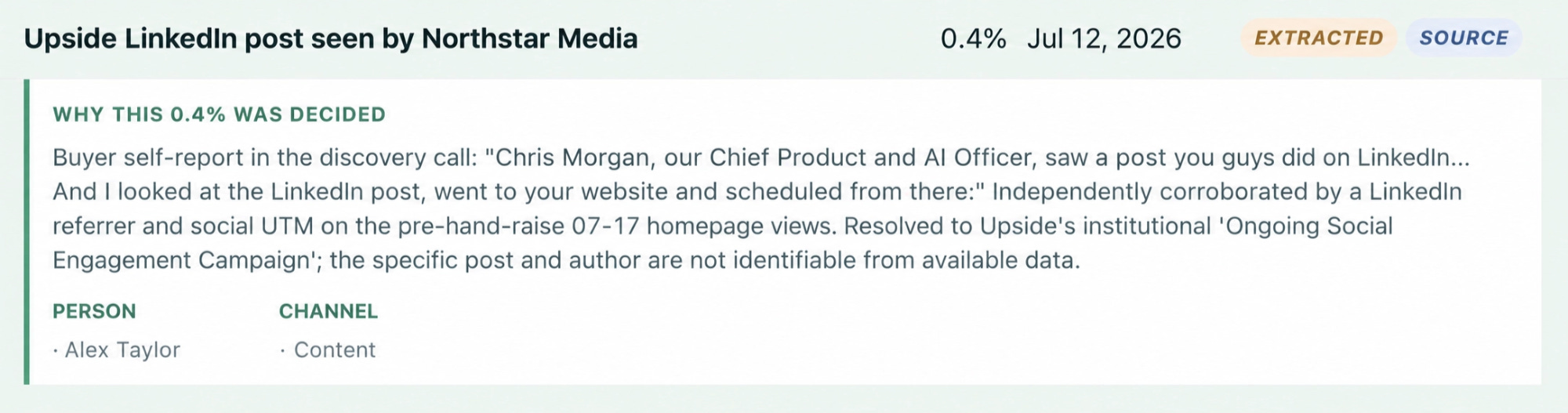
Internal forwarding: You reached one person, they forwarded it to four, two of which became decision makers. Your system only records the one recipient.
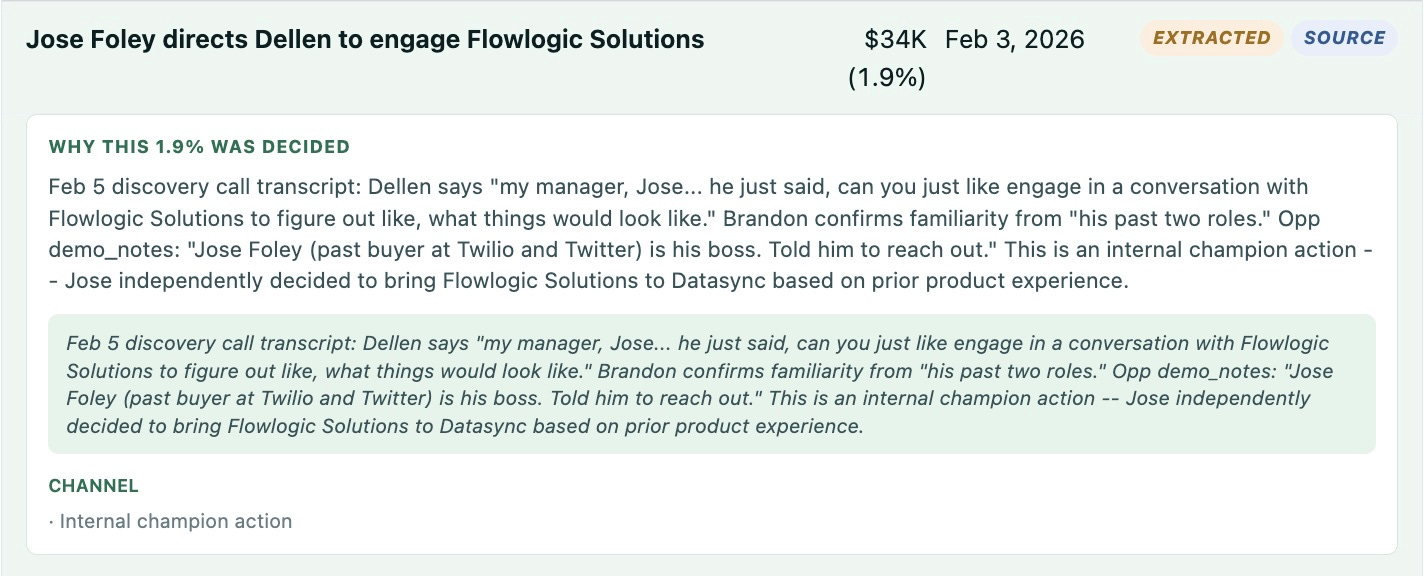
Peer conversations: Someone your buyer already trusts tells them you’re good. No UTM tracking. No visibility for you.
Pre-existing relationships: One of your AEs has known their CFO personally for 6 years. This never gets captured in any model and is a huge omission in their eventual decision to buy.
This is why I wanted to write about this. In ABM, all the unloggable stuff is what actually drives the strategy. But it turns out, with AI, a lot more of this context is recoverable. Now we can read 10,000 call transcripts and parse out who else was in the room, what touches sparked the most interest, and that “Dave from finance” is the same Dave that ultimately pushed the deal over the line. Carilu Dietrich has written the best thing I’ve read on this shift, in her piece on how AI is changing marketing attribution.
Now you can see a bunch of levers that actually make ABM succeed: how many of the buying committee do you have contact with? Are they the right people or just the reachable ones? Is engagement spreading inside the company or sitting with the same two people? Has anyone new appeared in email threads or meetings (which is really promising signal always)? Has a real conversation happened with anyone who can spend the money? When the account went quiet, did anyone notice? Answers to these questions are what allow you to unstick accounts and find the next route forward.
The system you want instead
If you’re resetting your system for ABM, make sure it includes these four things:
One timeline per account. Not per lead or opportunity. Capture everything that happened involving this company from every system you’ve got starting from the day you even considered selling to them or put them on an Excel sheet.
Resolved people and roles. Know who was involved, which was the champion, which was the blocker, which one quietly killed an early approach. This should include the people who never made it into your CRM and only exist as a first name in a meeting transcript. You want to measure committee behavior.
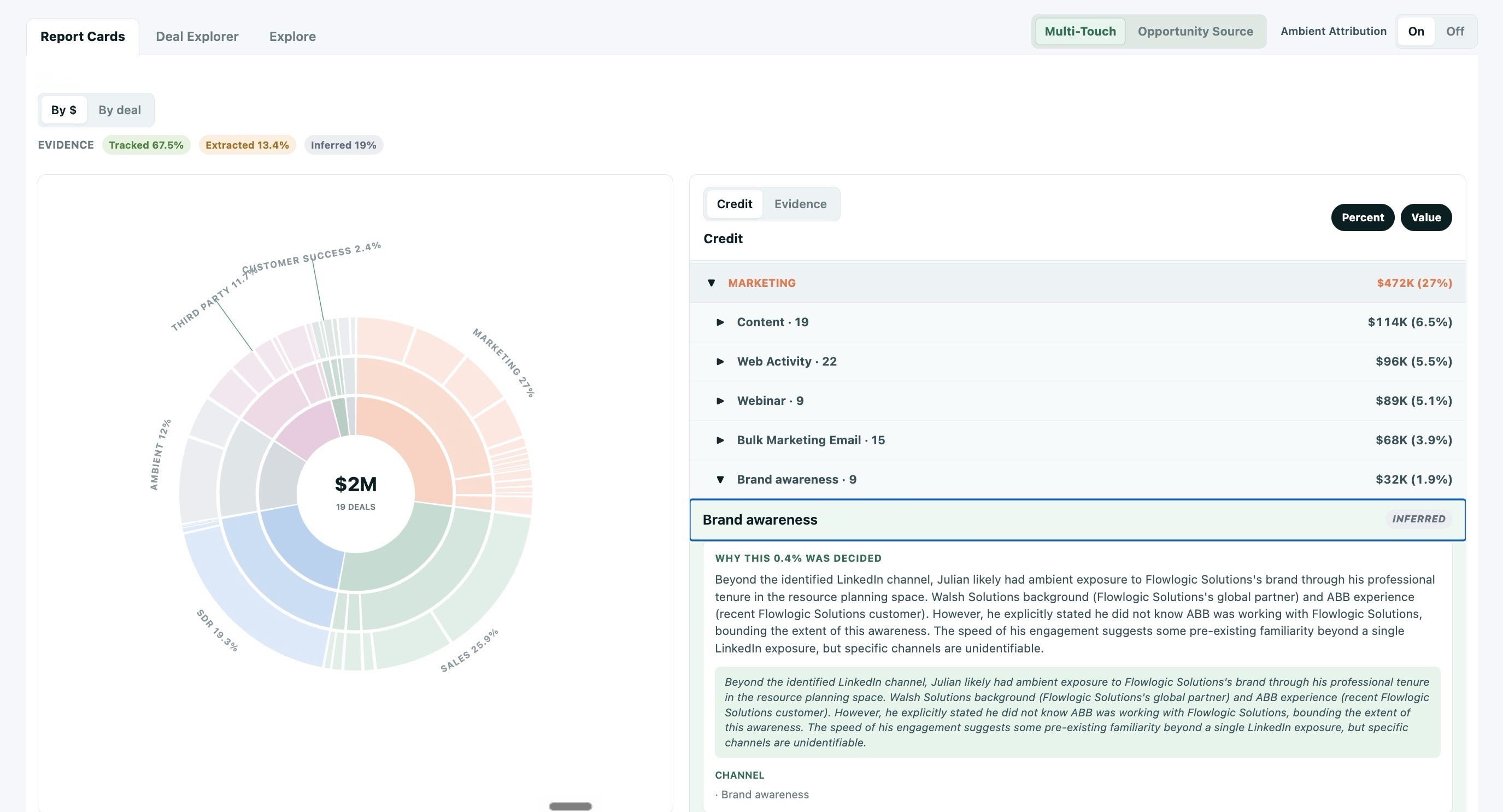
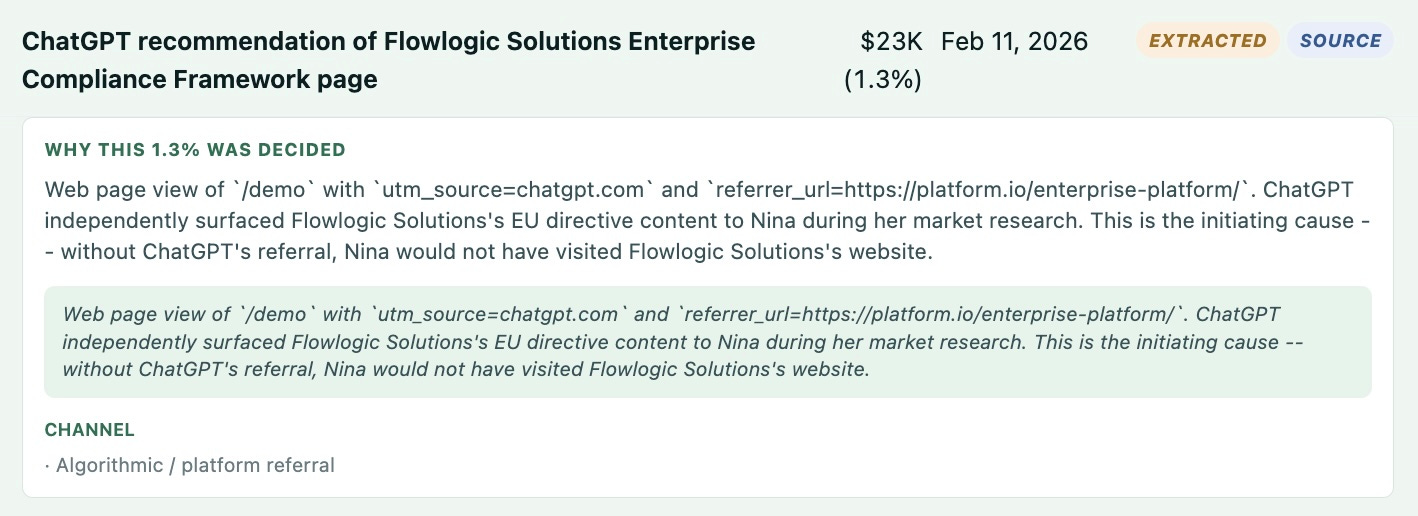
Evidence classified by how you know it. Don’t just log data. Know what you’ve been able to extract from unstructured data, like the forwarded email that got mentioned halfway through a call. Know what you’ve inferred. Know what’s unresolved - i.e. you don’t know where it came from. Give uncertainty an honest place to sit so you can see how much of deals depend on the invisible. That’s the only way to diagnose and tackle how to make it visible.
Reasoning you can interrogate. If your system tells you a dinner series drove 30% of an account’s progress, you need to be able to click in and read why and determine if you agree or not. Too many numbers have no context attached.
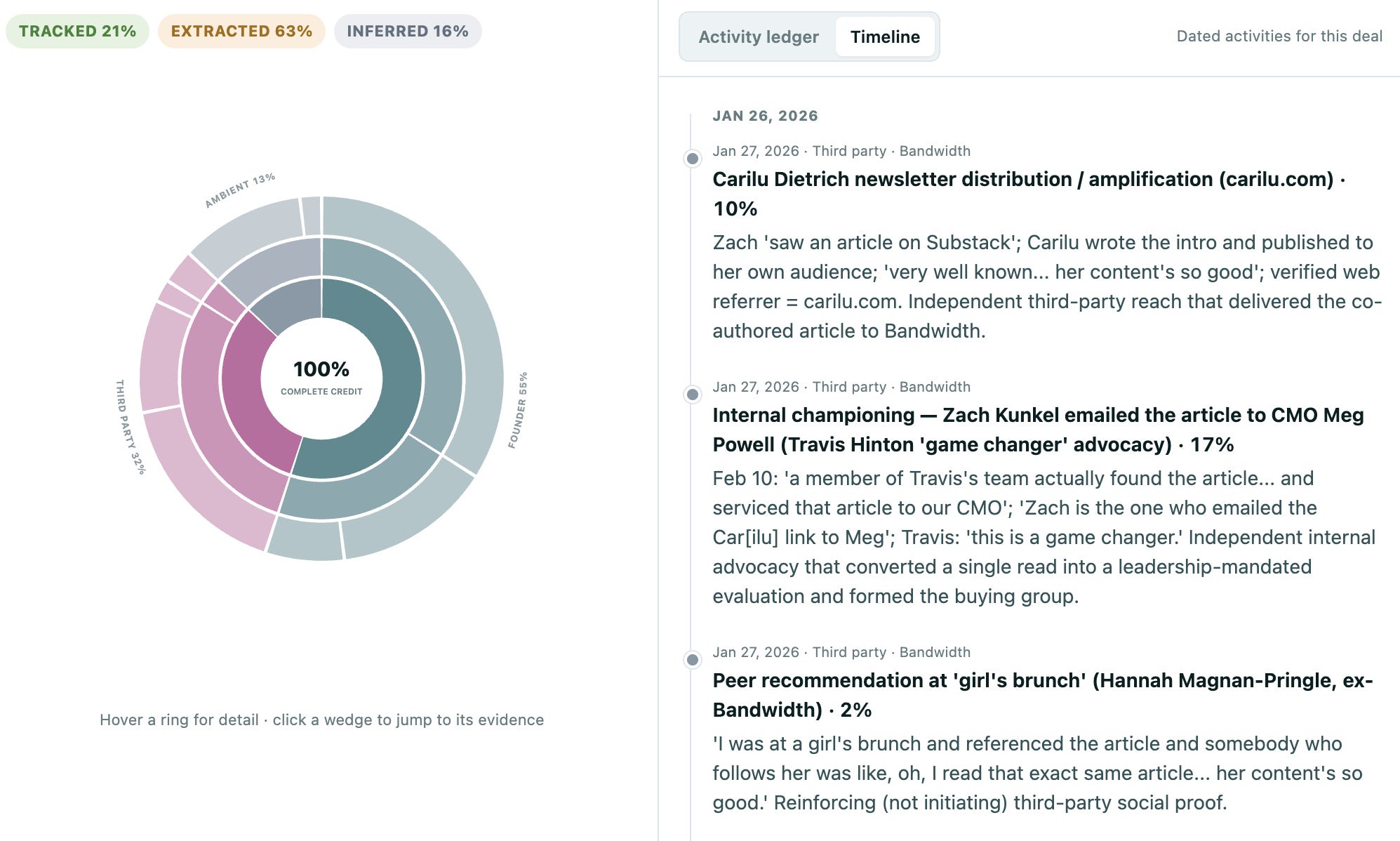
The Upside platform and their Pipedash product are the most concrete public examples I’ve found of someone shipping this shape of system. It reconstructs an account’s timeline out of CRM, email, meetings, web and events, and goes looking specifically for the buying group members no one logged.
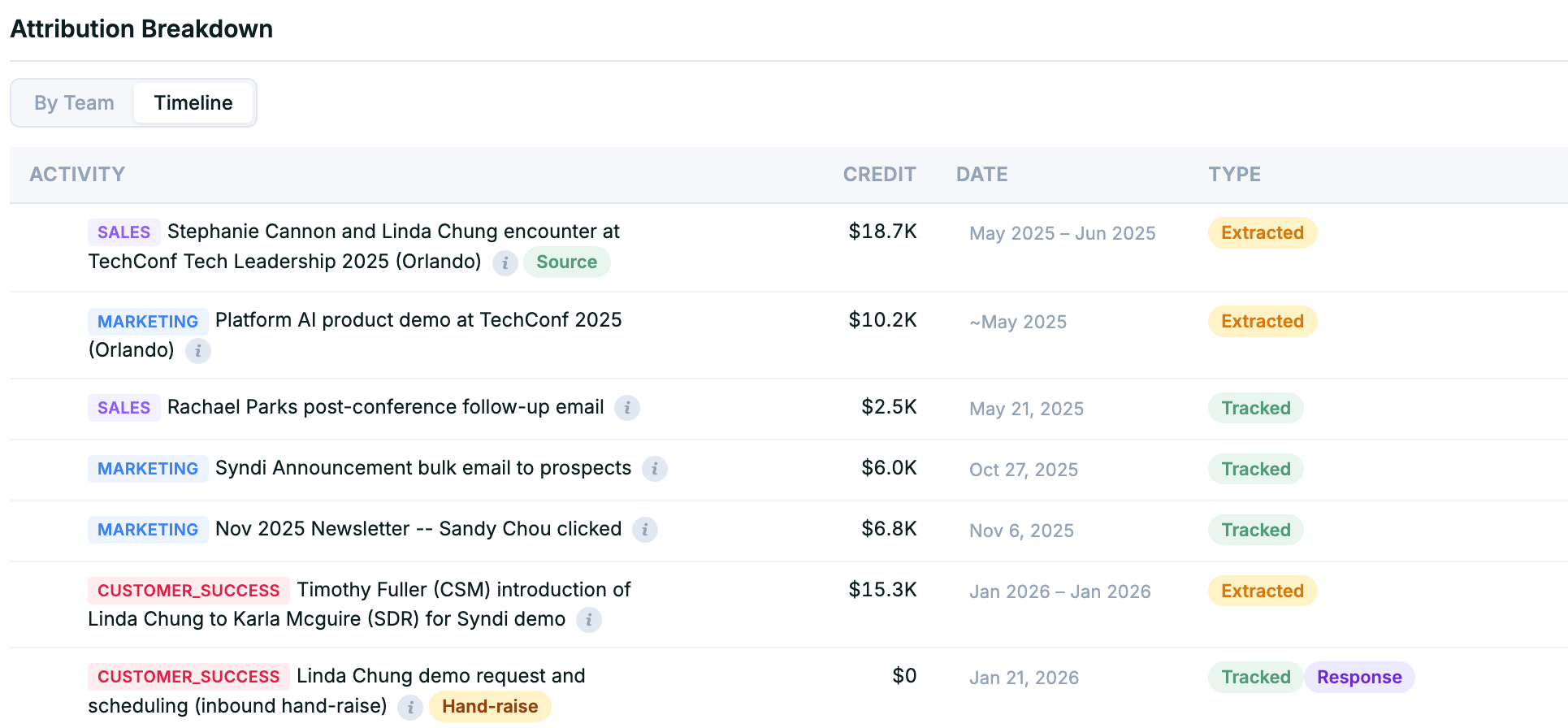
Then it does the thing I found genuinely delightful the first time I read it: instead of one model producing one answer, it runs several independent AI analysts across the full deal history, has each argue for an allocation, and puts a judge over the top that weighs the quality of the reasoning rather than counting votes. When they disagree badly it escalates instead of splitting the difference. Seems like the right amount of self awareness for a category this messy and fraught.
Where standard dashboards might give 100% credit on a deal to a demo request form, Pipedash would give the form nothing and put 30% on a webinar program that a champion had engaged with several months before. Sure, this is not perfect visibility into buyer journey, and it’s not neat and precise. But it is incredibly helpful when you sit down at the beginning of the quarter to rebalance budget for webinar vs. other levers.
The questions to ask (now answerable!)
If I compressed all of this into what to change on Monday, it’s the questions you should be asking - because there are in fact new and better ways to answer them. Stop asking what sourced an opportunity. That’s just a question about your record keeping.
Instead, start asking for each account:
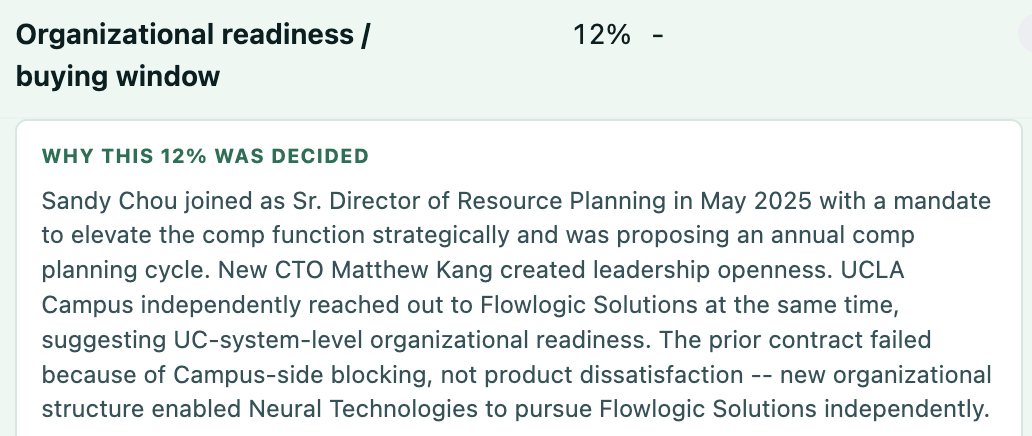
Why did this one become ready?
What changed in their world (not just what they clicked on)?
Which accounts moved this quarter and what does “moved” mean in a way you could defend to a skeptic?
Where are we deeply embedded in the buying committee? Where are we one thread away from losing the whole thing?
What did we spend on this account all in? Would we do it again?
Yes, these are all questions that could be answered by a smart human who has the time and attention to dive into account data. But humans are woefully unscalable and cost-intensive if you want to answer these questions for every account and make smarter decisions about future ones.
Beyond these, pressure test your target list a bit. Is it well calibrated? Are the accounts showing real progression indicative of different targets that should be added? What would have to be true to take a name off the list?
None of this makes the actual blocking and tackling of ABM easier… you still have to host the dinners and create the content and figure out/exploit every single warm touchpoint you have. It’s always going to be an exercise in patience.
But it does mean you get to stop pretending and spending. You no longer need to fake confidence that you know what works or deserves more budget only to come up empty. You can operate with confidence that you can suss out what changed an account’s mind - not just read between the lines of what you manage to write down.
When it comes to ABM, instruments are finally catching up to the strategy. Manage your list the way you’ve always talked about managing it - as a portfolio of relationships each in a knowable state that you have the power to change. It’s way more fun, I promise.
Thank you Mada and Alex for encouraging me to translate my consulting observations into this post. For more details on Upside, visit upside.tech (I was not paid to share this, just a big fan of what this team is making possible).
Camille Ricketts was the first marketing leader at Notion, helping see the company through the transition from pure PLG to enterprise traction. Prior, she started First Round Review, where she interviewed 200+ exceptional operators about the tactics of their success. She currently advises startups and CMOs on building brand, content, and community.
Camille, this is exactly the strategy. ABM is giving Tier 1 accounts a lot of attention. Salespeople struggle to understand that it's just being in touch and giving hugs. No magick or witchery. It's paying attention, making connections, and focusing on relationship development. And now we can track and prove the outcomes
The biggest shift here is moving from measuring activity to understanding decision-making.
Most GTM systems still optimize for what’s easiest to track: clicks, forms, and sourced opportunities. But buying decisions happen across people, conversations, relationships, timing, and signals that rarely make it into the CRM.
AI gives us a way to reconstruct that context at scale, without pretending every touchpoint can be reduced to a precise percentage. That feels like a much more useful definition of attribution in the AI era.